 Rentals


A valued employee is ready to work. But the distance from the parking lot to their desk, or across a warehouse floor every shift, stands between them and a normal day. Keeping someone capable and contributing shouldn’t wait on paperwork or a long-term purchase you don’t yet need. So we deliver a clean scooter straight to your Kansas City workplace on a simple flat monthly basis. That way, the accommodation is handled and your team member is back in the flow.
Workplace mobility accommodation is one of the quieter parts of HR. Most employers don’t deal with it often, and the rules feel intimidating until you’ve worked through one. Yet the practical question gets very little coverage: how do we actually get a scooter to this person, by when, and what does it cost? This page is for the HR generalist, ADA coordinator, facilities manager or small-business owner sorting that out for the first or fifth time.
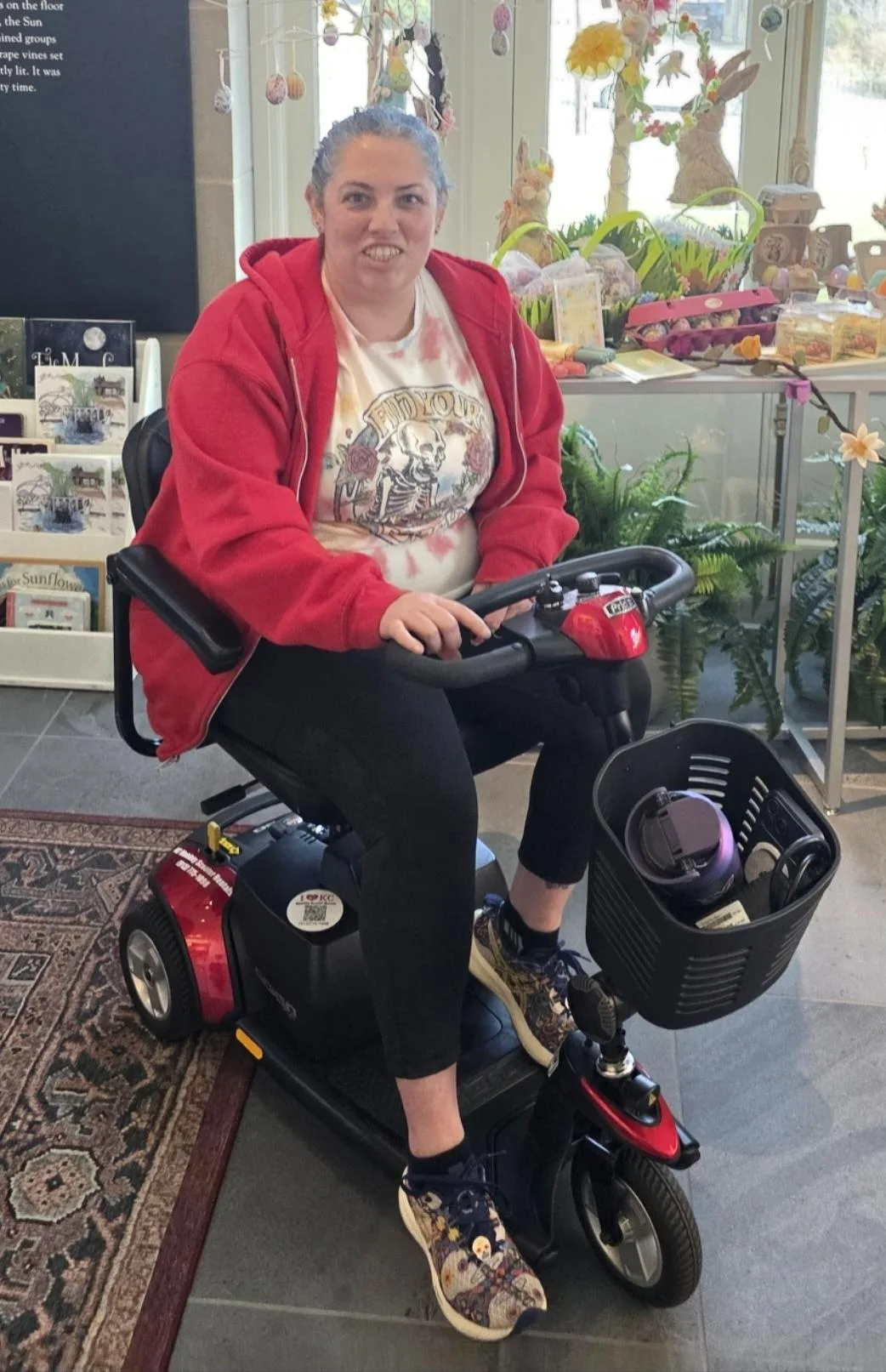
Our workplace ADA mobility scooter rental runs by the month for Kansas City employers handling temporary or recurring accommodations. The flow is simple: a phone call, a quote, delivery to your facility, monthly billing, and then a pickup when you no longer need it. For the employer side of the law, the U.S. Department of Justice ADA site and the Job Accommodation Network are good free starting points.
When a workplace ADA mobility scooter rental makes sense
A few common situations:
Temporary mobility needs. Sometimes an employee who needs a mobility aid for a while is ready to work, but the building layout isn’t realistic for them on day one. In that case, a scooter for the first six to twelve weeks bridges the gap. It’s also almost always cheaper than the alternatives, such as extended leave, building changes or losing the employee.
Pregnancy-related accommodation. In jobs with a lot of walking, such as warehouses, manufacturing, hospitals and schools, late pregnancy can make the day impractical without an accommodation. A short-term rental gets the employee through the final weeks comfortably.
Recurring needs. Some employees need help with long walks for a few weeks or months at a time. For them, a monthly rental that scales up or down is more practical than buying equipment that may sit unused most of the year.
Modified-duty plans. When an employee works on modified duty for a period, a scooter is often part of the plan. The employer handles payment, and we work with whoever is coordinating the accommodation to get equipment in place quickly.
Facility accessibility. Some Kansas City employers with large campuses, such as manufacturers, distribution centers, hospitals and universities, keep one or more scooters on hand for employees or visitors. For low-use equipment like this, long-term rental usually costs less than buying.
The Kansas City employer landscape
We deliver across the entire metro. Common workplace delivery stops include:
- Downtown Kansas City office buildings, including Crown Center campus tenants, Plaza office buildings and the Power & Light corridor
- Overland Park and Johnson County corporate campuses, including the College Boulevard, 119th Street and Corporate Woods office complexes
- Distribution and manufacturing facilities in North Kansas City, Riverside, the Bottoms, and along I-29 and I-435
- Hospital campuses across the major hospital systems
- Educational institutions: community colleges, K–12 districts and higher-ed campuses
- Leavenworth, Lansing and the western metro, including federal facilities
So yes, we can deliver the scooter to a Kansas City area workplace. Once a reservation is confirmed, we coordinate with whatever security or shipping process your facility uses.
How the rental works
Here’s the process for a workplace rental:
- You call or email us with the basics: the location, the rough timeframe, the employee’s name for the rental record, and a contact for delivery. We don’t need any health information.
- We send a quote. It’s a flat monthly rate, with no per-diem charges and no per-mile fees. The quote includes delivery, pickup, basic instruction at delivery and support for the length of the rental.
- You confirm, and we deliver. Most facility deliveries happen within one to three business days of confirmation. Meanwhile, we coordinate the handoff with your security, receiving or facilities team.
- At delivery, we walk the rider through how the scooter works. It’s usually a 10- to 15-minute orientation on controls, charging, basic safety and storage. Then we leave a printed reference and our after-hours contact details.
- Monthly billing continues for as long as you need the rental. It’s month to month, with no contracts and no early termination fees.
- When the rental ends, you call us, we schedule pickup, and we collect the scooter.
That’s the entire process, and it’s deliberately simple. If the need is shorter than a month, mobility scooters are also available at a weekly rate ($180–$240), so you can pay weekly instead. Our three Pride scooter models carry recommended rider weights of 265, 275 and 400 lb.
What we don’t do
This part matters. We’re a rental company, so we don’t:
- Process prescriptions or outside paperwork
- Judge whether a scooter is right for a particular employee
Those decisions belong with the employee and your company’s accommodation specialist. Instead, what we bring is reliable equipment, fast delivery and a flat monthly rate that’s easy to put on a P.O.
Why monthly rental beats buying for most employers
Buying a mobility scooter outright is a poor fit for most workplace accommodations. First, it commits you to equipment that may sit unused most of the year. It also raises questions about depreciation, maintenance and storage. Plus, it can create an expectation of a permanent accommodation that may not match the real situation. Monthly rental avoids all of this:
- Flexibility. End the rental whenever the accommodation period ends.
- Maintenance handled. If something goes wrong with the scooter, like a tire, a battery or a control board, we fix it. So you don’t manage a maintenance budget.
- No depreciation question. It’s a clean monthly operating expense, not a capital purchase.
- Right-sized equipment. If the employee’s needs change and a different model fits better, we swap the unit instead of you trying to repurpose a purchased scooter.
For long-term, fully permanent accommodations, buying sometimes makes sense, and we’ll tell you if yours is one of them. But for the typical six-week to twelve-month workplace rental, the monthly model wins on cost and flexibility almost every time.
Discretion and process
Workplace accommodations are personal. So we treat the rental the way we’d want a vendor to treat ours: professionally, promptly and without getting involved in matters that aren’t our business. Our paperwork covers the rental itself, meaning the equipment, location, dates and billing, and nothing more. We don’t ask the employee for health information. We also don’t share the rental record with anyone outside your named contacts, and we don’t store anything we don’t need to run the rental.
If you need an invoice format that fits your accounts payable process, such as P.O. references, cost center codes or departmental routing, let us know and we’ll match it.
Industry-specific considerations
Some Kansas City industries have patterns worth calling out:
Distribution and fulfillment. The KC metro is a major logistics hub. North Kansas City, Riverside, Lenexa and the I-35 corridor are full of distribution and fulfillment centers. Workers who need a mobility aid for a while often need a transition period before they can manage long shifts on concrete. A short-term rental, paired with whatever modified-duty plan the employer and worker agree on, bridges that period without permanent facility changes.
Manufacturing. KC manufacturing ranges from small custom shops to major automotive and aerospace plants. Where the production floor allows scooter use, a rental can keep an experienced employee at work through a temporary mobility need instead of off the job entirely. We also coordinate with EHS or facilities teams on any safety points specific to the floor.
Hospitals. Hospitals and large health systems ask staff to walk a lot. In fact, nurses, technicians and support staff often walk eight to twelve miles a shift. A short-term scooter rental can keep experienced staff at work when they would otherwise be on leave. Most KC hospital systems have accommodation processes that fit cleanly with a monthly equipment rental.
Office environments. Most office accommodations are simpler. The work itself doesn’t involve much walking. Still, parking-lot-to-desk distances, multi-floor buildings or large corporate campuses can create a mobility gap. Often, a scooter for the parking lot and the longest indoor walks solves it without any further accommodation.
Education. K-12 districts, community colleges and universities occasionally need short-term scooter rentals for staff, or for visiting speakers and lecturers. The booking flow is the same as any other workplace rental.
The question most employers actually have
A lot of the content online about workplace mobility accommodation comes from lawyers, who focus on compliance rather than logistics. Other content comes from equipment vendors, who focus on technical details rather than simple operations. What’s often missing is the basic answer to the question that matters most: how do we get a scooter here this week, and what does it cost?
For the Kansas City metro, that answer is a phone call to us at (913) 775-1098. We’ll handle it. For other business rentals, see our corporate and event rentals page, or our Fort Leavenworth guide for federal visitors.