 Rentals


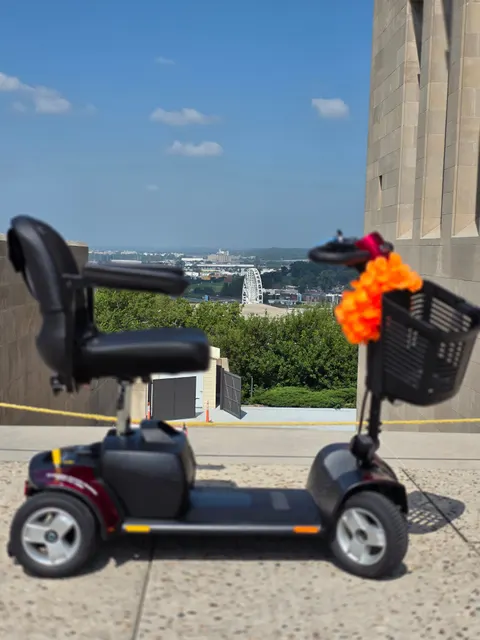
The glass bridge over the poppy field (nine thousand of them, each one standing for a thousand lives) is the kind of moment people come to Kansas City for. Afterward they carry it quietly up the elevator to the top of the tower for the whole-city view. None of that should hinge on how the climb up Memorial Hill from Union Station treats your knees. The museum is one of the most accessibility-friendly in the country, elevators to every level and the bridge fully rollable, so the hard part of the war stays the only hard part of the day. We stage a charged scooter at your hotel so you can take the galleries, the bridge, and the tower at your own unhurried pace.
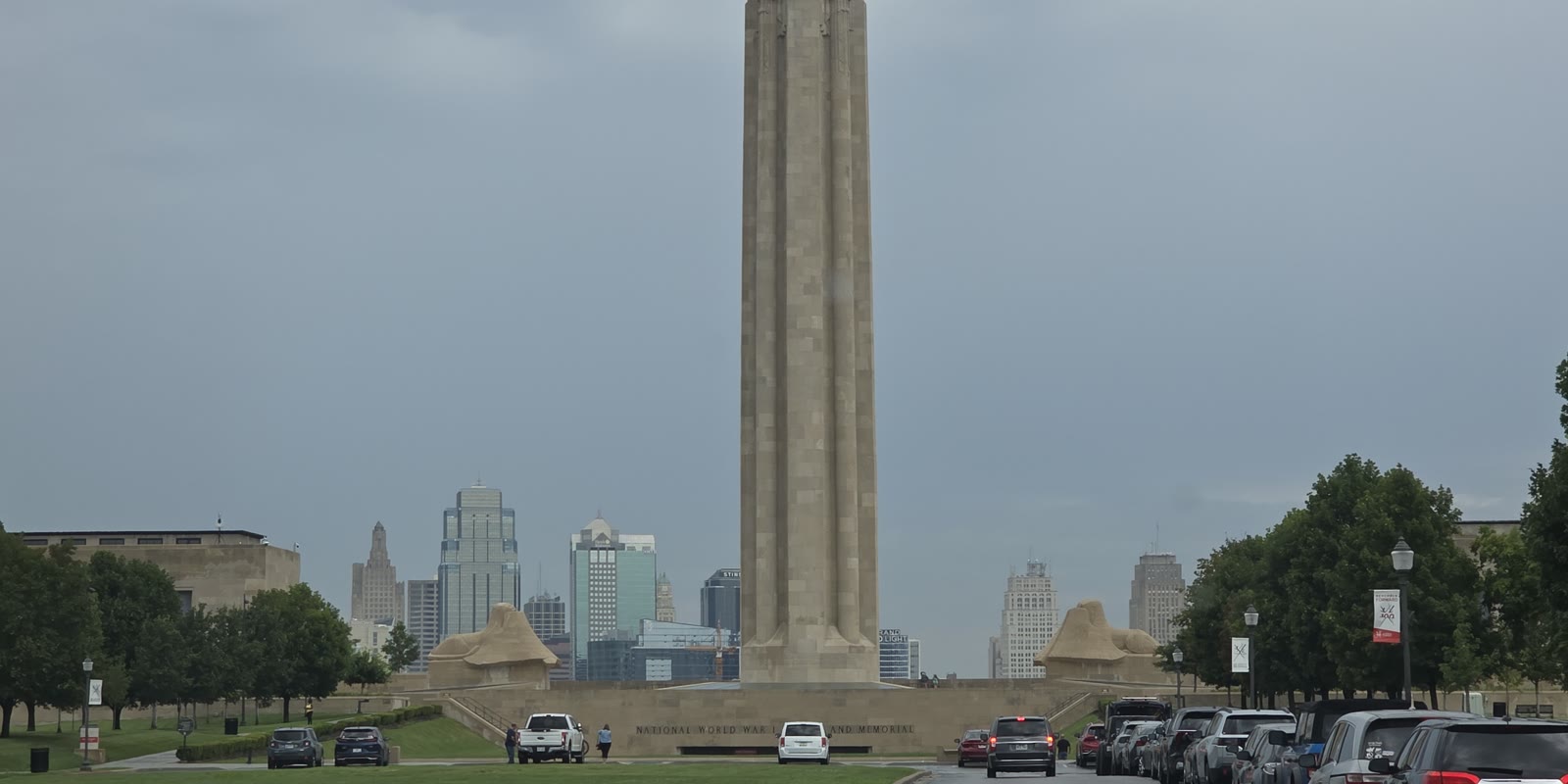
The National World War I Museum and Memorial is the nation’s official World War I museum. It sits atop Memorial Hill, directly south of Union Station in Kansas City. It began in 1926 as the Liberty Memorial and then grew into a full-scale museum in 2006. Today the complex combines the Liberty Memorial tower, large underground galleries, the glass bridge over the poppy field, and outdoor memorial grounds. As a result, it is one of the most distinctive and accessible military history museums in the world. So whether you’re in town for a convention, a family trip, or a museum weekend, it is one of the easiest visits in the metro, and a scooter rental makes it easier still.
WWI Museum Mobility Scooter Rental: How We Deliver
With a WWI Museum mobility scooter rental, we deliver to your Kansas City hotel before your check-in, never to the museum itself. That way, the scooter is staged at the bell stand and ready when you arrive. Book online at least 24 hours ahead, or call (913) 775-1098 if your trip is sooner. Every rental runs a minimum of 2 days, and our hotel delivery page explains the details.
Once you check in, you take the scooter to the museum by whichever route fits your stay. Crown Center hotels (Westin and Sheraton) are the natural bases, because the museum is essentially next door. Downtown convention hotels and Plaza-area hotels are a short rideshare away. If you’re combining the museum with Union Station, which we strongly recommend, the ramped walkway between the two works for standard scooters on pleasant days. Either way, the scooter stays with you throughout the visit and then goes back to your hotel for overnight charging.
Things to see and do at the WWI Museum
The museum has two main zones. First, there are the indoor galleries, below ground level and entered through the main lobby. Then there are the outdoor memorial grounds, with the Liberty Memorial tower, Memory Hall, the sphinxes, and the wider landscape. For current hours, tickets and exhibitions, check the official National WWI Museum and Memorial site.
Inside the galleries
Main Gallery and the Poppy Bridge. Entry to the main gallery passes across a glass bridge that spans a field of 9,000 poppies, each representing 1,000 combat deaths during World War I. The visual impact is powerful, and the bridge itself is fully accessible. You can ride a scooter across the glass floor, and the scale of the war hits you right away.
Main Gallery. The gallery runs in time order and by theme. It covers the war’s causes, the major theaters of operation, the lives of soldiers and civilians from every nation involved, and the war’s consequences. Interactive exhibits, artifacts, and multimedia presentations all work together, so plan for at least 90 minutes here.
Horizon Theater. This is the museum’s main film-based orientation experience, and it is worth the time.
The tower and the grounds
Liberty Memorial Tower. This 217-foot tower is topped with an observation deck that gives one of the best skyline views of Kansas City. An elevator takes visitors, including those using scooters, to the observation level. From there, the view spans downtown, Union Station, Crown Center, and the central corridor.
Memory Hall. A dedicated space for reflecting on sacrifice. It also includes murals and honored remains.
Outdoor memorial grounds. The Liberty Memorial complex includes sphinxes (Memory and Future), outdoor plaques and monuments, and landscaped grounds. Most of the outdoor experience is accessible via paved pathways.
Exhibit Hall and special exhibitions. Rotating major exhibitions fill a dedicated gallery and often cover broader military history topics beyond WWI specifically.
Café. On-site dining is available for light meals during longer visits.
Accessibility at the WWI Museum
The National WWI Museum and Memorial is one of the most accessibility-friendly major military history museums in the country.
Entrances and galleries
Entrances. The main entrance is level and fully accessible, with automatic doors and gradual ramps. Plus, multiple accessible entry points handle different arrival patterns.
Main gallery level. The underground gallery is reached by a dedicated elevator and includes a single accessible circulation path that takes you through the entire chronological sequence. Aisle widths and exhibit heights accommodate personal mobility devices.
Poppy bridge. The glass bridge is fully accessible and navigable by scooter, with safety glass and edge protection throughout.
Tower, grounds and amenities
Liberty Memorial tower. The tower’s elevator serves the observation deck, and the cab is sized for standard mobility scooters. Once you’re up, the deck itself is accessible, with clear sightlines for seated visitors.
Memory Hall and the outdoor grounds. Paved pathways serve most of the outdoor spaces, so standard four-wheel scooters handle the grounds comfortably.
Café and restrooms. Both are fully accessible, and ADA-compliant restrooms are spread through the main entry and gallery levels.
Parking. Accessible parking is available at the museum’s entry level with direct access into the lobby.
Getting From Your Hotel to the WWI Museum
Crown Center hotels: This is the most convenient base, since a short roll or rideshare handles the trip. Also, the ramped walkway from Crown Center and Union Station up Memorial Hill is workable on pleasant days.
Downtown convention hotels: Rideshare is simplest, usually 5-10 minutes.
Plaza hotels: A rideshare takes about 10-15 minutes.
Union Station: On good-weather days, the outdoor ramped walkway is part of the experience. However, on hot, cold, or rainy days, a quick rideshare between Union Station and the museum works well.
Driving in: Use the museum’s accessible parking at the entry level.
Equipment Recommendations
For a WWI Museum visit, we recommend a four-wheel travel scooter with reliable battery range and comfortable handling for both indoor gallery and outdoor grounds use.
Battery range. A full visit covers two to four miles of scooter use, with the outdoor memorial grounds adding somewhat more if you explore thoroughly. Standard travel scooter batteries handle this comfortably.
Stable outdoor handling. The outdoor grounds include paved pathways with some grade transitions and occasional seam or crack. A four-wheel scooter handles all of it without issue.
Comfortable seat. Multi-hour museum days keep you on the scooter, and the galleries often invite longer stops at specific exhibits. That is why a contoured seat matters.
Weather-readiness for outdoor transitions. If you’re combining the indoor galleries with Memory Hall and the Liberty Memorial tower outdoor approach, plan for weather-appropriate clothing, sun protection during summer visits, and warm gear in winter.
Paired-visit sizing. A WWI Museum visit often pairs with Union Station (for Science City and the Planetarium) and Crown Center, all within a short rolling or rideshare distance. For the combined day, let us know at booking, and we’ll pick the battery and seat for the full itinerary rather than a single venue. You can also compare our mobility scooters by recommended rider weight. The rental takes you across all three destinations without any equipment changes or mid-day returns to your hotel.
When to book, and what kind of rental this is
For most WWI Museum visits, booking one to two weeks ahead is comfortable. However, three to four weeks is better for Memorial Day and Veterans Day weekends, school breaks, and major exhibition openings.
KC Mobility Scooter Rentals is a hospitality business offering personal convenience rentals. Visitor rentals are direct-pay, just like any other piece of trip logistics. For the visit itself (the hotel, Memorial Hill, the galleries, the poppy bridge, the tower view), we are the people to call.